
A overseas building gear maker is betting huge on President Donald Trump’s commerce insurance policies whilst builders cancel billions in clear vitality and tech manufacturing initiatives.
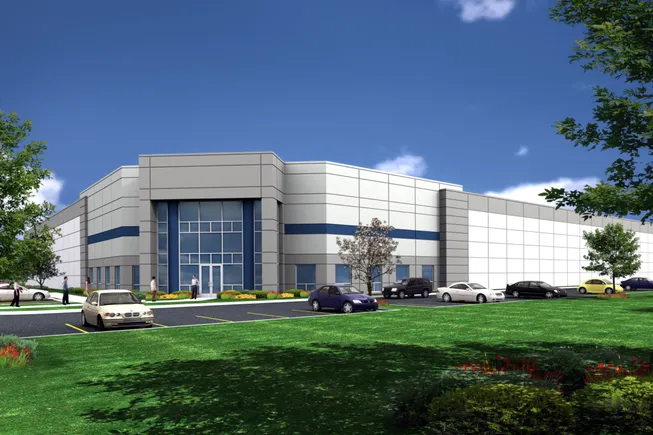
JCB, the U.Okay.-based building gear firm, plans to double the size of its San Antonio, Texas, manufacturing unit to 1 million sq. ft, mentioned Anthony Bamford, JCB chairman, in a news release. The corporate cited the Trump administration’s tariffs as a key cause to localize extra manufacturing.
Novartis, a Swiss drugmaker, additionally plans to considerably broaden its U.S. footprint, together with in Florida, Texas, New Jersey and California. The corporate not too long ago dedicated $23 billion over five years to construct six new factories, broaden three current ones and add a brand new analysis and growth hub.
However these initiatives function the exception, slightly than the rule, of developers’ reaction to tariffs which were introduced, elevated and paused — typically concurrently — on Trump’s watch.
These growth bulletins are doubtless “to be outweighed by the worth of initiatives which are canceled,” mentioned Ken Simonson, chief economist on the Related Common Contractors of America.
Certainly, project stress picked back up in March, significantly for personal initiatives, based on the most recent information from Cincinnati-based ConstructConnect. The report revealed builders scrapped practically twice as many personal initiatives as public ones final month, based on the report.
So, whereas some companies are constructing in response to tariffs, most within the building business are pulling again.
EV megaprojects slowdown
Take, for instance, electrical car services. Simply over a 12 months in the past, contractors expressed bullishness within the electric vehicle manufacturing boom.
Electrical equipment building, which incorporates EV battery services, accounted for nearly half of all manufacturing construction in 2023, based on Dodge Development Community.
However momentum round these initiatives is starting to shift, based on latest undertaking abandonments. U.S.-based EV and battery producers canceled more projects within the first quarter of 2025 than within the earlier two years mixed, based on information from Atlas Public Coverage, a Washington, D.C.-based enterprise guide.
Though particular drivers range, the widespread thread behind lots of the cancellations is rising uncertainty, mentioned Sophie Latham, coverage affiliate at Atlas Public Coverage. Shifting tariff insurance policies, federal tax credit score adjustments and murky timelines round Division of Vitality funding have made undertaking financing tougher, she mentioned.
“The state of producing will rely rather a lot on how tariffs and tax credit shake out this 12 months,” mentioned Latham. “In some circumstances, these tax credit are the distinction between an organization investing within the U.S. and overseas, so adjustments to them might inspire extra cancellations.”
Practically half of the $30 billion in clear tech factories scheduled to return on-line in 2025 at the moment are predicted to face delays or cancellations, based on a report from BloombergNEF, a analysis group targeted on clear vitality financing.
Main undertaking cancellations
Battery maker KORE Energy, a Coeur d’Alene, Idaho-based provider of battery cell tech, halted building earlier this 12 months on its $1.25 billion lithium-ion battery plant in Buckeye, Arizona. The corporate, which beforehand acquired conditional approval for an $850 million federal mortgage, opted to retrofit an current plant as an alternative.
Chip producer Intel additionally delayed building of its Ohio One semiconductor plant, largely as a consequence of rising building prices and weaker-than-expected chip demand. Microsoft, likewise, not too long ago axed a number of information middle initiatives within the U.S., citing a slowdown in regional demand for cloud providers.
The tech large paused three Ohio information middle developments, together with a $1 billion undertaking outdoors Columbus, and has additionally delayed builds in Illinois, North Dakota and Wisconsin, according to Bloomberg.
Transferring ahead
As tariff volatility deepens, contractors face tough choices about how you can adapt procurement methods with out overcommitting to a coverage atmosphere that may change inside months, mentioned Julian Seaside, particular counsel at Pillsbury, a New York Metropolis-based regulation agency.
Authorized specialists urge building companies to remain versatile. The newly imposed reciprocal tariffs, layered on prime of current Part 232 duties for supplies like steel and aluminum, have created a tangled set of commerce guidelines that impression construction inputs across the board.
“We now have a really complicated set of various and overlapping tariff regimes,” mentioned Stephan Becker, accomplice at Pillsbury, throughout an April 10 webinar on tariff impacts. “Now, when U.S. importers are evaluating what’s going to occur to their merchandise into their provide chains, they’ve to look at each one among these totally different regimes and work out, ‘Am I topic to reciprocal tariffs, is my product already topic to a Section 232 tariff, am I entitled to one of many present exemptions?’”
These exemptions, nevertheless, are restricted.
Although some supplies with at the least 20% U.S. content material could qualify for lowered tariffs, and exclusions exist for sure items together with copper, most contractors might want to consider their publicity on a project-by-project foundation, mentioned Sahar Hafeez, senior counsel at Pillsbury.
Customs guidelines additionally forestall companies from sidestepping tariffs by routing supplies by different nations with out significant processing, mentioned Becker.
“When you’ve got a product from China and also you ship it to Vietnam after which ship it to america and say it’s a Vietnamese product, that’s customs fraud,” mentioned Becker. “The origin of a product basically is decided by making use of a protracted standing check below the customs regulation known as substantial transformation, which in lots of circumstances is a actual fact particular, case-by-case analysis.”
Contractors hoping to purchase time or delay tariff impacts may wish to discover avenues resembling customs bonded warehouses or overseas commerce zones, mentioned Becker. These packages permit companies to retailer imported items with out paying duties until or till the supplies are withdrawn to be used within the U.S.
That degree of strategic planning will turn into more and more vital, as federal commerce and tax insurance policies stay in flux, mentioned Latham.
“Tariffs are clearly vital,” mentioned Latham. “However after all that panorama is altering on daily basis.”
It’s that shifting panorama that helped sink Worldwide Recycling Group’s $300 million recycling plant in Pennsylvania, among the many different initiatives detailed right here. The corporate cited Trump’s tariffs and the Division of Vitality’s choice to not concern a $182 million mortgage as vital causes for pulling the plug.
“I’m personally devastated after 18 years of working to carry this imaginative and prescient to a actuality that we have now failed to beat these challenges,” mentioned IRG’s Co-founder and CEO Mitch Hecht, based on Utility Dive.
Trending Merchandise

KAFAHOM Power Tool Organizer Wall Mount, 4-Tier Drill Holder for Cordless Tools, 2-Pack Set, Garage Storage Rack with Side Hooks for Hammers & Pliers, Tool Organizer for Workshop/Utility Room



XMJY 5 Pack Funny Hardhat Stickers – Can We Fix It? No, It’s Fucked, Cute Cartoon Hard Hat Stickers for Builder, Waterproof Vinyl Stickers for Tool Box, Helmet (3 inch)

Cisily Brown Sponge Holder for Kitchen Sink, Sink Caddy Organizer with High Brush Holder, Kitchen Countertop Organizers and Storage Essentials, Rustproof 304 Stainless Steel, Soap Dispenser Organize

Mohawk Fil-Stik Wax Putty Stick, White M230-0202, 1 Count


