
UPDATED 12:56 PM ET
Amrize, the nation’s largest cement producer, is making a $700-million wager {that a} new “Made in America” label can do greater than stir patriotic enchantment.
Launching Nov. 13 at flagship vegetation in Missouri and Texas, the corporate says the certification ensures home manufacturing and expands U.S. capability. An ancillary good thing about domestically sourced supplies is the discount of greenhouse gasoline emissions in one among building’s most emission-intensive supplies.

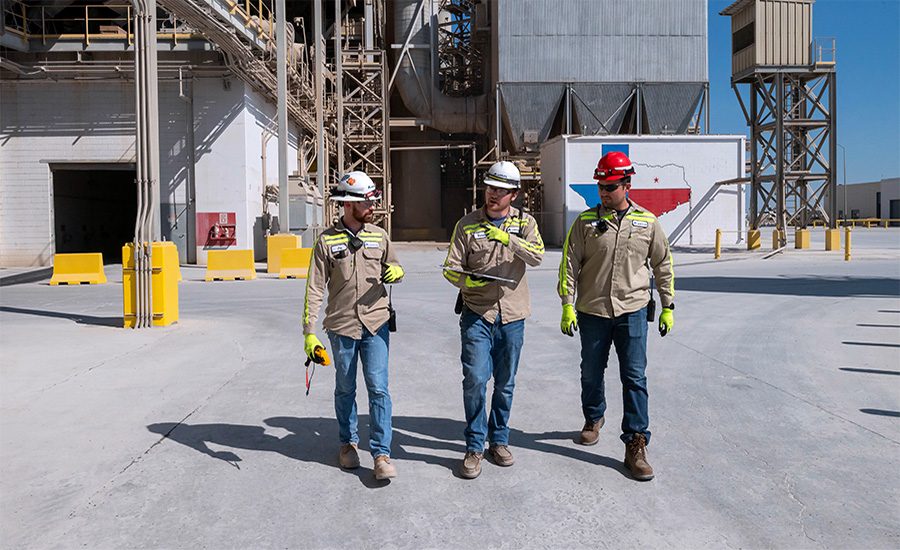
Amrize’s new “Made in America” label certifies its cement merchandise are manufactured completely within the U.S.
Picture courtesy of Amrize.
“Our new ‘Made in America’ label gives our prospects the boldness that their product complies with U.S. requirements for high quality, efficiency and reliability, with local-to-local service,” Jaime Hill, president of Amrize Constructing Supplies, mentioned in an announcement.
“We’re pleased with the position our options play in constructing America and are dedicated to advancing the U.S. constructing business, supporting American jobs and serving because the accomplice of selection for the skilled builders of America,” he added.
Amrize plans to increase the label throughout 5 of its U.S. vegetation, beginning with amenities in Ste. Genevieve, Mo.; Midlothian, Texas; Satan’s Slide, Utah; Holly Hill, S.C.; and Portland, Colo.
The rollout coincides with upgrades that add roughly 760,000 tons of annual manufacturing, together with a 660,000-ton enlargement at Ste. Genevieve—North America’s largest cement plant—and $50 million in modernization work at Midlothian.
Patrick Cleary, Amrize’s senior vice chairman for U.S. business cement, mentioned the Made in America label is supposed to instill confidence and help financial development. “We see a transparent alternative to strengthen partnerships that worth verified home content material,” he mentioned.

Amrize’s Ste. Genevieve, Mo., facility—the biggest cement plant in North America—is present process a 660,000-ton enlargement as a part of the corporate’s $700-million “Made in America” funding program.
Picture courtesy of Amrize.
The U.S. cement and concrete sector contributes more than $130 billion yearly to the financial system and helps about 600,000 jobs, in keeping with the American Cement Affiliation. Nationwide shipments reached roughly 105 million metric tons in 2024, with imports supplying about 23% of complete demand—valued at almost $16 billion.
Though the brand new label echoes “Purchase America” sentiment, cement itself stays exterior Federal Freeway Administration domestic-content mandates.
FHWA guidelines that took effect Oct. 1 start phasing in U.S. manufacturing and part thresholds for manufactured merchandise beneath federally funded initiatives, however cement is just not but lined.
“For the 5 flagship vegetation the place we’re launching the label, we’ve verified the origin of all uncooked supplies by means of a full provide evaluation,” the corporate mentioned in an electronic mail.
“We see a transparent alternative to strengthen our partnerships that worth verified home content material with prospects searching for to specify and promote Made in America options,” Patrick Cleary, Amrize senior vice chairman of Industrial Cement for the U.S., mentioned in an electronic mail to ENR.
“Success shall be measured not solely in market efficiency, but additionally by our prospects’ belief,” he added.
A further benefit of utilizing domestically sourced supplies is lowering ecological influence. Whereas the corporate asserts carbon discount was not a part of its calculus, native procurement, by definition, will decrease the quantity of power wanted to acquire uncooked supplies in comparison with non-domestic sources. The result’s a discount in internet greenhouse gasoline emissions.
A number of states, together with California and Colorado, have adopted Buy Clean standards that issue carbon emissions into materials procurement. That convergence between sourcing coverage and emissions disclosure may give Amrize’s label further traction.
RELATED
New White House Buy America Guidance Draws Scrutiny
Materials Sourcing and Carbon Footprint
Amrize’s “local-to-local” logistics mannequin reduces supply distances, a rising think about embodied-carbon accounting. That connection between native manufacturing and emissions drew cautious endorsement from Kari Yuers, chair of the American Concrete Institute’s Chemical Admixtures Committee and president of Kryton International.

U.S. cement shipments rose steadily from 2020 to 2024, reaching about 105 million metric tons, whereas import share climbed to 23.5%, in keeping with U.S. Geological Survey information.
Chart by ENR
“When you decrease transportation distances, you naturally decrease embodied carbon,” Yuers informed ENR. “Nevertheless it’s just one piece of the puzzle. We’d like parallel strikes—electrification of transport, alternative-fuel kilns, 1L cements, carbon-capture pilots—to really transfer the needle.”
She added that verification issues as a lot as intent. “Labels are invaluable in the event that they’re verifiable,” she mentioned. “With out clear information on embodied-carbon depth, a domestic-content label dangers changing into simply one other advertising and marketing declare.”
Producing cement clinker by heating limestone and clay in kilns is essentially the most energy-intensive facet of making Portland cement. Clinker is the important thing product the place the chemical response takes place and is accountable for almost all of the environmental emissions related to producing cement, which is ultimately utilized in concrete.
Contractors and state transportation businesses can confirm domestic-content claims and environmental disclosures by means of Federal Commerce Fee labeling guidelines and ASTM-compliant Environmental Product Declarations.
Such documentation is more and more required in materials procurement scoring and Purchase Clear reporting frameworks from federal authorities, ACI and different standards-making our bodies.
Decarbonization and Business Outlook
The corporate’s funding push consists of course of effectivity upgrades, in addition to breaking floor this 12 months on a brand new fly-ash beneficiation plant in Virginia, aiming to reclaim landfilled ash as a supplementary cementitious materials—a key step in offsetting clinker emissions.
Many U.S. concrete producers presently import fly ash from abroad as a result of lack of coal-fired energy vegetation within the U.S., making procurement from Europe or coal-friendly nations vital. That provide chain was disrupted not solely throughout the pandemic but additionally throughout extra recent shortages of the coal byproduct as a consequence of heavy demand for mission-critical amenities.
“Beneficiated fly ash and calcined clay could make an actual dent in carbon, however entry and allowing are limiting elements,” Yuers mentioned. “We’d like regional provide options so contractors aren’t ready months for different supplies.”
Yuers added that Portland-limestone cement, identified in business requirements as Kind 1L, can decrease CO₂ depth by 10–15% with out compromising structural efficiency when combine designs are correctly adjusted. “They’re the quickest near-term win,” she mentioned. “They’re confirmed and prepared if the market calls for them.”
Cement manufacturing accounts for roughly 71 million metric tons of CO₂ a 12 months—about 4.4% of U.S. industrial greenhouse-gas output, in keeping with EPA and Clear Air Activity Drive information.
With building exercise anticipated to rise by means of 2030, producers are going through rising stress from homeowners and transportation departments to doc life-cycle carbon reductions by means of Environmental Product Declarations.
“Home manufacturing and low-carbon manufacturing don’t should be separate objectives,” Yuers mentioned. “If firms like Amrize align each, they’ll redefine what ‘Made in America’ means for the following era of infrastructure.”
For Amrize, the label positions the corporate the place home sourcing and carbon discount objectives converge.
“The label reinforces Amrize’s position because the native accomplice serving to states, builders, and contractors supply supplies produced in their very own communities,” the corporate mentioned. “It offers a transparent sign to prospects and public businesses that working with a labeled Amrize cement product straight helps American manufacturing, American jobs and native financial development.”
Whether or not the initiative turns into a verified aggressive normal—or just savvy branding—will rely on information the business has solely begun to measure.
— Jeff Yoders contributed reporting to this story.
Correction: This story has been up to date to replicate correct attribution to quotes by Patrick Cleary. Moreover, the Made in America label shall be used at 5 named amenities, not throughout all 13 vegetation owned by Amrize, as beforehand reported.
Trending Merchandise

KAFAHOM Power Tool Organizer Wall Mount, 4-Tier Drill Holder for Cordless Tools, 2-Pack Set, Garage Storage Rack with Side Hooks for Hammers & Pliers, Tool Organizer for Workshop/Utility Room



XMJY 5 Pack Funny Hardhat Stickers – Can We Fix It? No, It’s Fucked, Cute Cartoon Hard Hat Stickers for Builder, Waterproof Vinyl Stickers for Tool Box, Helmet (3 inch)

Cisily Brown Sponge Holder for Kitchen Sink, Sink Caddy Organizer with High Brush Holder, Kitchen Countertop Organizers and Storage Essentials, Rustproof 304 Stainless Steel, Soap Dispenser Organize

Mohawk Fil-Stik Wax Putty Stick, White M230-0202, 1 Count


