
The Metropolitan Transportation Authority’s lawsuit over withheld federal funds for the Second Avenue Subway Part 2 venture follows a playbook already examined on one other New York megaproject: the $16-billion Gateway Hudson Tunnel, the place a federal court docket ordered restoration of suspended funds after a similar funding freeze.
Now, transit officers are making use of the identical contract-breach argument to a $7.7-billion subway enlargement already moving through early construction, with energetic contracts, ongoing utility relocation and extra packages advancing towards award.
Filed March 17 within the U.S. Courtroom of Federal Claims, the grievance alleges the U.S. Dept. of Transportation has withheld $58.6 million in reimbursements tied to a $3.4-billion federal full funding grant settlement (FFGA), which covers roughly 44% of the venture’s capital value below the executed full funding grant settlement.
New York Gov. Kathy Hochul called the action unlawful, saying, “As soon as once more, New York has been compelled to sue the Trump Administration to cease them from erratically shutting off billions of {dollars} in beforehand dedicated infrastructure funding.”
Earlier than the suspension, DOT had reimbursed $126.9 million throughout 94 requests—typically inside days of submission. The MTA now says $52.8 million in submitted requests stay unpaid, whereas one other $5.8 million couldn’t be processed after DOT disabled the MTA’s entry to its ECHO-Net reimbursement portal, in keeping with the grievance.
As a result of the FFGA operates as a pay-as-you-go reimbursement pipeline, the dispute instantly impacts money movement supporting energetic contracts, procurement sequencing and contractor funds.
RELATED
NYC Advances Plan for $7.7B East Harlem Subway Extension
Searching for fast solutions on development and engineering subjects?
Attempt Ask ENR, our new sensible AI search software.
Ask ENR →
Energetic Building Collides With Funding Disruption
Not like many infrastructure funding disputes, Part 2 is just not in planning.
The MTA has awarded its largest tunneling contract—a $1.97-billion design-build package deal to Join Plus Companions, a three way partnership of Halmar Worldwide and FCC Building—to bore 1.8 miles of dual tunnels and assemble station shells between a hundred and twentieth and one hundred and twenty fifth streets.
“That is the biggest tunneling contract the MTA has ever awarded,” MTA Chair and CEO Janno Lieber stated when the contract was accepted, calling it “a rattling good funding.”
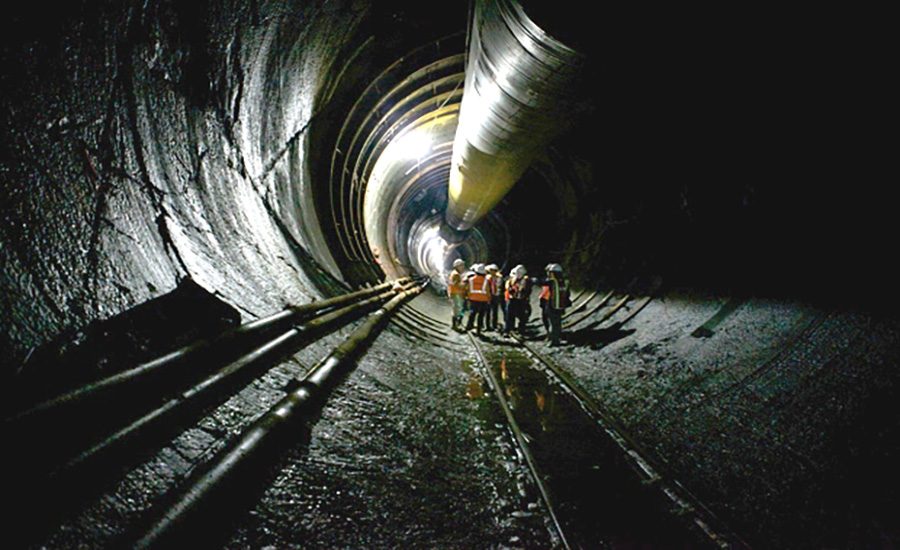
The contract contains rehabilitation of a 1970s-built tunnel segment, excavation of seven shafts for entrances and ancillary amenities and use of a variable-density tunnel boring machine that installs precast concrete lining because it advances, eliminating a secondary crew and enhancing effectivity.
Utility relocation is underway in East Harlem, with heavy civil development anticipated to ramp up in 2026 and tunnel boring scheduled to start in 2027.
The venture is structured as a multi-package program, with separate contracts for tunneling, stations, programs and finishes—sequencing that will depend on predictable funding movement.
In keeping with court docket filings, the subsequent main contract—overlaying development of the 106th Avenue station construction and tunnel south of one hundred and tenth Avenue—is scheduled for MTA board consideration at its March 26 assembly, inserting quick strain on procurement timelines if funding uncertainty persists.
RELATED
COWI to Lead Design on MTA $1.97B Second Ave. Subway Extension
Federal Funding Mannequin Below Authorized Stress After Gateway Ruling
The MTA’s authorized argument intently tracks the Gateway dispute, the place venture sponsors efficiently argued that halting reimbursements below an executed federal funding settlement constituted a breach of contract, forcing funds to renew on an energetic development program.
In that case, a federal decide discovered DOT had acted in a “prepared, fireplace, goal” method, failing to comply with contractual procedures earlier than suspending funds.
The case is filed within the U.S. Courtroom of Federal Claims, signaling that the MTA is treating the dispute primarily as a contract-payment subject moderately than a regulatory problem. The court docket has jurisdiction over claims tied to executed agreements with the federal authorities, inserting the concentrate on whether or not DOT’s suspension of reimbursements violates the phrases of the FFGA.
That precedent is more likely to form how courts consider the Second Avenue case, significantly given each initiatives depend on FFGA constructions that tie federal funding on to development progress.
The venture’s financing displays a layered mannequin widespread to giant transit expansions.
Along with the $3.4 billion FFGA, Part 2 depends on state and native funding sources, together with congestion pricing income, to assist remaining prices.
The FFGA is a part of the federal Capital Funding Grant program, expanded below the Infrastructure Funding and Jobs Act, which accelerated funding for main transit initiatives nationwide.
The dispute underscores a key vulnerability in that mannequin: even when funding is allowed and agreements are executed, supply will depend on constant reimbursement execution.
The MTA alleges DOT’s actions—tied to broader coverage critiques—have disrupted that course of, forcing the company to divert funds from different priorities to keep up progress.
A U.S. Dept. of Transportation spokesperson stated the company is “dedicated to making sure hardworking taxpayer {dollars} are being spent responsibly” and is “contemplating all authorized avenues,” in keeping with statements reported by the Associated Press.
Engineering Complexity and Supply Danger
Part 2 has been structured to keep away from the delays and price overruns that plagued Part 1, which opened in 2017.

Employees set up electrical programs and make ADA compliance enhancements on the Myrtle Av Station because the MTA advances system upgrades alongside main enlargement work, together with the Second Avenue Subway Part 2 venture.
Picture: MTA/Trent Reeves
MTA officers have emphasised early geotechnical investigation and utility mapping to cut back subsurface danger, together with procurement reforms that included greater than 30 various technical ideas to enhance constructability and decrease value.
The venture additionally reuses a tunnel phase constructed within the Seventies—now built-in into the 106th Avenue station—to cut back excavation scope and save tons of of thousands and thousands of {dollars}.
Floor circumstances in East Harlem differ from Part 1’s Manhattan schist, requiring pressurized tunnel boring machines, groundwater management and cautious settlement administration to guard adjoining utilities and constructions.
Stations at 106th, 116th and one hundred and twenty fifth streets can be constructed as deep underground caverns in mixed-face circumstances, utilizing grouting, dewatering and localized floor stabilization.
These strategies are extremely schedule-dependent, growing the significance of uninterrupted contract sequencing as soon as excavation begins.
That sequencing sensitivity extends past engineering into venture supply, the place funding reliability turns into a controlling consider sustaining development momentum.
The MTA doesn’t declare development has stopped.
As an alternative, the company says it has maintained progress by way of “extraordinary efforts” however warns these measures are usually not sustainable.
If reimbursement delays persist, the company argues the venture faces a “domino impact” of impacts, together with delayed contract awards, disrupted sequencing and elevated prices.
Part 2 is predicted to serve about 110,000 day by day riders, relieve congestion on the Lexington Avenue line and restore subway entry to East Harlem greater than eight a long time after the unique elevated line was eliminated.
“This can be a venture that’s about equity, mobility, and economic growth,” Lieber stated.
RELATED
$4.5B Second Ave Subway Opens in Manhattan
A Take a look at Case for Energetic Megaproject Supply
The case finally checks whether or not federal businesses can interrupt reimbursement flows below executed funding agreements with out destabilizing energetic development applications.
For a megaproject constructed on steady reimbursement, the end result will assist outline how resilient federal funding mechanisms are when coverage disputes intersect with initiatives already in movement.
Trending Merchandise

KAFAHOM Power Tool Organizer Wall Mount, 4-Tier Drill Holder for Cordless Tools, 2-Pack Set, Garage Storage Rack with Side Hooks for Hammers & Pliers, Tool Organizer for Workshop/Utility Room



XMJY 5 Pack Funny Hardhat Stickers – Can We Fix It? No, It’s Fucked, Cute Cartoon Hard Hat Stickers for Builder, Waterproof Vinyl Stickers for Tool Box, Helmet (3 inch)

Cisily Brown Sponge Holder for Kitchen Sink, Sink Caddy Organizer with High Brush Holder, Kitchen Countertop Organizers and Storage Essentials, Rustproof 304 Stainless Steel, Soap Dispenser Organize

Mohawk Fil-Stik Wax Putty Stick, White M230-0202, 1 Count


