
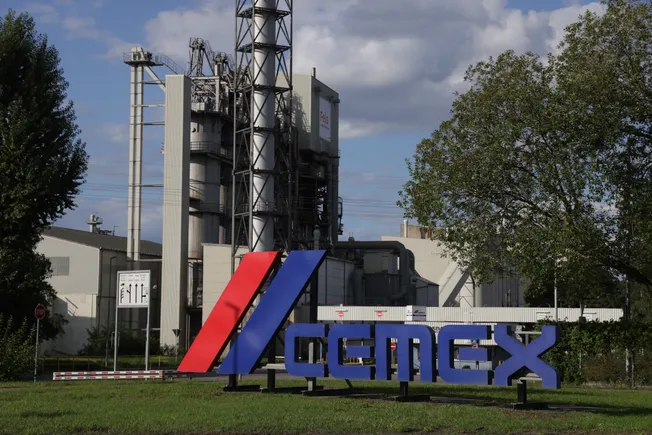
Gonzalo Galindo is head of Madrid-based Cemex Ventures, the funding arm of the constructing supplies large. Opinions are the writer’s personal.
It’s no secret building faces a expertise scarcity, one which’s widening as veteran employees retire, mission calls for rise and sustainability objectives add new complexities.
Happily, the rise of building know-how has launched a wave of improvements — from AI-driven mission administration instruments and superior robotics to digital twin know-how — that may assist fill this hole by reshaping how buildings are designed, constructed and maintained.

Gonzalo Galindo
Courtesy of Cemex Ventures
But, adopting these applied sciences comes with its personal set of challenges, together with excessive upfront prices, coaching employees on new methods and managing security dangers. To achieve success, we have to steadiness innovation with sensible workforce improvement.
Minding the hole
Synthetic intelligence has emerged as a serious focus in building over the past 12 months, with AI-driven mission administration software program serving to groups keep aligned, cut back errors and enhance effectivity. These instruments centralize mission information, guaranteeing that each one stakeholders have entry to the identical up-to-date data, minimizing miscommunication and delays.
One other method know-how is reworking jobsite planning is thru real-time course of monitoring methods like ObraLink. Historically, when pouring concrete for a high-rise constructing, building groups should wait 28 days to substantiate that the concrete has correctly cured. ObraLink’s platform considerably reduces this ready interval by offering real-time information on concrete energy, permitting groups to scale back downtime and maintain tasks on schedule.
3D printing additionally exhibits promise. Whereas nonetheless within the early phases of adoption, the know-how is getting used to print every part from concrete partitions and basis parts to intricate façade panels, personalized formwork and even whole small-scale constructions. Because it matures and turns into cheaper, 3D printing might play a key position in addressing ability shortages by automating labor-intensive duties and lowering the necessity for giant crews.
Extra superior automation — comparable to robotics for on-site duties — stays within the early phases. Not like manufacturing, through which standardized duties permit for environment friendly automation, building websites current continuously altering circumstances.
As an example, robotic drywall installers and bricklaying machines exist however require recalibration for every mission to accommodate totally different wall dimensions, materials compositions and structural layouts. Transporting and assembling these machines throughout a number of websites additionally provides logistical complexity, making them much less sensible for a lot of contractors.
Over time, developments in machine studying, modular automation and adaptable robotics will assist overcome these limitations, making automation extra viable.
Begin small
Change generally is a daunting prospect for each managers and workers, nevertheless it’s unavoidable as automation and digital instruments rework building. Those that adapt by growing new expertise — comparable to working and sustaining robotics, analyzing information from digital twins or managing AI-driven scheduling instruments — will discover themselves in excessive demand.
Many building firms function on skinny margins, making it tough to justify upfront investments in unproven improvements. To get round such hesitancy, firms can begin with small-scale pilot applications that present concrete advantages earlier than they decide to bigger rollouts. Showcasing early wins — comparable to sooner mission completion instances or improved security metrics — will help construct confidence amongst each management and frontline employees.
Simply as architects transitioned from hand-drawn blueprints to CAD software program, building professionals should turn into proficient in rising applied sciences. This transition received’t occur in a single day, however gradual integration will ease the educational curve.
Web site supervisors might spend much less time on paperwork and extra time analyzing real-time mission information from drones and sensors. Tools operators would possibly transition from guide controls to overseeing fleets of autonomous equipment.
To assist this shift, firms ought to foster a studying tradition through which upskilling is steady moderately than a one-time effort. Investing in on-the-job coaching, on-line programs and business partnerships can be certain that employees keep forward of the curve.
Future ahead
In the end, overcoming the talents hole and making ready for the longer term go hand in hand. As automation and digital instruments reshape the development business, a collaborative effort might be important to navigate this transition efficiently.
Management should take step one by adopting strategic applied sciences that improve effectivity, whereas employees want entry to coaching that equips them with the talents to work alongside these developments. When the business as an entire acknowledges innovation not as a disruption however as a chance for progress, it will likely be higher positioned to fulfill each current and future challenges.
Trending Merchandise

KAFAHOM Power Tool Organizer Wall Mount, 4-Tier Drill Holder for Cordless Tools, 2-Pack Set, Garage Storage Rack with Side Hooks for Hammers & Pliers, Tool Organizer for Workshop/Utility Room




XMJY 5 Pack Funny Hardhat Stickers – Can We Fix It? No, It’s Fucked, Cute Cartoon Hard Hat Stickers for Builder, Waterproof Vinyl Stickers for Tool Box, Helmet (3 inch)

Cisily Brown Sponge Holder for Kitchen Sink, Sink Caddy Organizer with High Brush Holder, Kitchen Countertop Organizers and Storage Essentials, Rustproof 304 Stainless Steel, Soap Dispenser Organize

Mohawk Fil-Stik Wax Putty Stick, White M230-0202, 1 Count


