
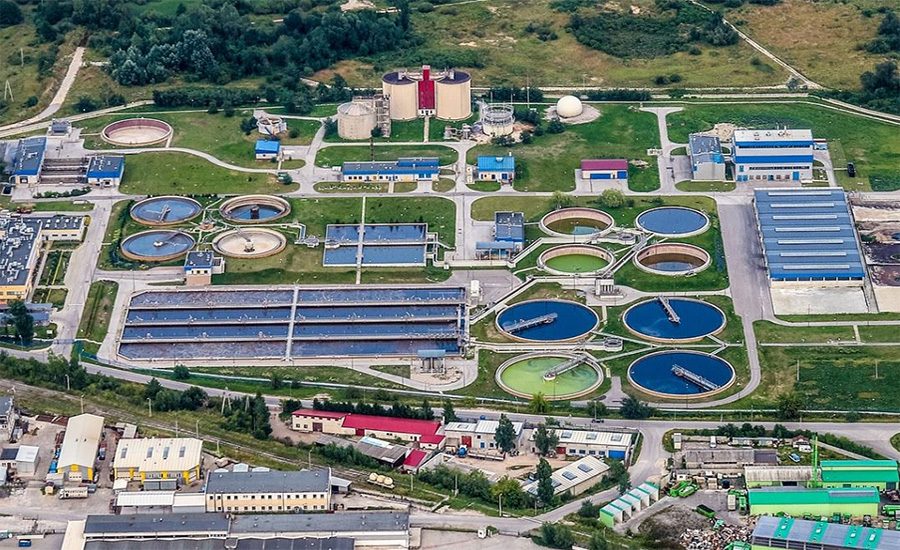
America’s infrastructure is exhibiting its clearest indicators of enchancment in a long time, however the momentum stays depending on sustained funding and supply capability as federal funding approaches a vital inflection level, in keeping with the American Society of Civil Engineers’ 2025 Infrastructure Report Card.
ASCE raised the nation’s general infrastructure grade to a C from a C- 4 years in the past, with practically half of the 18 evaluated classes bettering and no sector receiving a D- for the primary time for the reason that report card was launched in 1998. The positive aspects mirror the early influence of the 2021 Infrastructure Funding and Jobs Act and associated federal packages that started distributing extra funding in 2022.
Nonetheless, ASCE cautions that the enhancements are pushed largely by short-term funding will increase moderately than long-term certainty, leaving ageing and climate-exposed methods susceptible to improve venture supply if funding slows as soon as the regulation’s authorizations expire in 2026.
Even when present funding ranges proceed, ASCE estimates a $3.7-trillion funding hole over the following decade to deliver infrastructure methods right into a state of excellent restore.
“Contemplating the intensive time it takes to review, design and full initiatives, sustained funding at present or larger funding ranges might be mandatory for infrastructure to proceed to enhance,” the group mentioned within the report.
Infrastructure Improves, however Timing Now Issues

The American Society of Civil Engineers’ 2025 Infrastructure Report Card finds that U.S. infrastructure circumstances are bettering general however positive aspects stay susceptible with out sustained post-2026 funding.
Read the full report.
Picture courtesy of ASCE
The 2025 report exhibits positive aspects throughout a number of traditionally underperforming sectors, however progress stays uneven throughout interconnected methods. Ports obtained the best grade, a B, whereas rail additionally improved. On the decrease finish, stormwater and transit funding remained at a D grade, and roads, levees, colleges and wastewater amenities posted solely marginal positive aspects.
Power was downgraded regardless of document federal spending—with ASCE citing rising capability constraints, rising demand from electrification and information facilities, and lagging transmission and grid modernization relative to system complexity. The downgrade underscores a broader problem dealing with a number of sectors: funding alone doesn’t assure improved efficiency when coordination and execution capability lag.
The divergence highlights a rising coordination danger. When enhancements advance at completely different speeds throughout interdependent methods, weaknesses in a single community can undermine positive aspects elsewhere.
Capital Rises Sooner Than Supply Capability
ASCE estimates that attaining and sustaining a state of excellent restore throughout all 18 infrastructure classes would require $9.1 trillion in funding from 2024 to 2033. Private and non-private funding is projected to succeed in about $5.4 trillion over that interval if latest federal funding ranges maintain, leaving a $3.7-trillion shortfall.
For infrastructure house owners, that hole is already shaping how initiatives are sequenced, scoped and bid. Companies prioritize preservation of “fair-condition” property and defer discretionary enlargement to keep away from triggering extra pricey rehabilitation later. That preservation bias is more and more mirrored in bid packages favoring rehabilitation, phased building and programmatic supply over single, all-at-once megaprojects.
RELATED
US Infrastructure Grade Improves to a C on ASCE Report Card, Bolstered by Federal Funding
ASCE additionally stresses that outcomes rely not solely on federal funding but in addition on state, native and utility execution capability. Jurisdictions with mature capital packages and bonding authority are higher positioned to soak up infrastructure act {dollars}, whereas others face delays tied to staffing shortages, charge constraints or restricted supply expertise.
However funding is simply a part of the equation. Throughout practically each infrastructure class, ASCE identifies climate-driven stress as a defining efficiency issue. Excessive climate occasions brought about greater than $180 billion in injury in 2024, reinforcing ASCE’s conclusion that resilience investments—whereas growing upfront prices—scale back long-term monetary and operational danger.
That shift is increasing scopes, schedules and bid pricing throughout a number of sectors. Life-cycle price evaluation is more and more embedded in funding standards and procurement selections—notably for water, transportation and power property uncovered to flooding, warmth and wildfire danger.
Compounding the problem is a persistent workforce scarcity throughout engineering, building and inspection roles. Whilst funding has elevated, many homeowners lack adequate in-house employees or contractor capability to ship initiatives at scale, widening the hole between their complexity and accessible labor and technical assets, ASCE notes.
Much less seen, however equally consequential, are persistent information gaps. ASCE discovered that unreliable or incomplete asset information stays widespread in sectors together with stormwater, levees, colleges, broadband and public parks. In apply, these gaps shift danger again onto house owners and contractors, steering companies towards conservative supply methods that restrict monetary publicity however gradual systemwide enchancment.
RELATED
$900B Final Defense Bill Passes House With Sweeping Procurement, Infrastructure Changes
The 2026 Take a look at: What Grades Don’t Present
The report’s central warning is operational, not tutorial: timing now issues as a lot as funding.
Authorizations below the Infrastructure act expire in 2026, however initiatives usually require years of planning earlier than building begins. ASCE warns that uncertainty over when initiatives are bid, how they’re packaged and whether or not they proceed may delay supply, fragment scopes and lift long-term prices.
What the grades don’t present is how house owners are already responding to that uncertainty.
Throughout sectors, companies are advancing environmental evaluations and preliminary design work forward of building, breaking giant packages into phased or programmatic contracts and prioritizing rehabilitation of “fair-condition” property over enlargement initiatives carrying larger long-term danger.
For contractors, that shift is reshaping backlog composition—favoring regular program work over single, all-at-once awards. Whereas the strategy limits danger in an unsure funding surroundings, it additionally stretches supply timelines and slows wanted systemwide enchancment.
For house owners, engineers and contractors, the following two years will decide whether or not right now’s planning pipeline converts into sturdy building—or whether or not deferred upkeep as soon as once more turns into the dominant technique for U.S. infrastructure methods.
Trending Merchandise

KAFAHOM Power Tool Organizer Wall Mount, 4-Tier Drill Holder for Cordless Tools, 2-Pack Set, Garage Storage Rack with Side Hooks for Hammers & Pliers, Tool Organizer for Workshop/Utility Room



XMJY 5 Pack Funny Hardhat Stickers – Can We Fix It? No, It’s Fucked, Cute Cartoon Hard Hat Stickers for Builder, Waterproof Vinyl Stickers for Tool Box, Helmet (3 inch)

Cisily Brown Sponge Holder for Kitchen Sink, Sink Caddy Organizer with High Brush Holder, Kitchen Countertop Organizers and Storage Essentials, Rustproof 304 Stainless Steel, Soap Dispenser Organize

Mohawk Fil-Stik Wax Putty Stick, White M230-0202, 1 Count


